 Skeinote
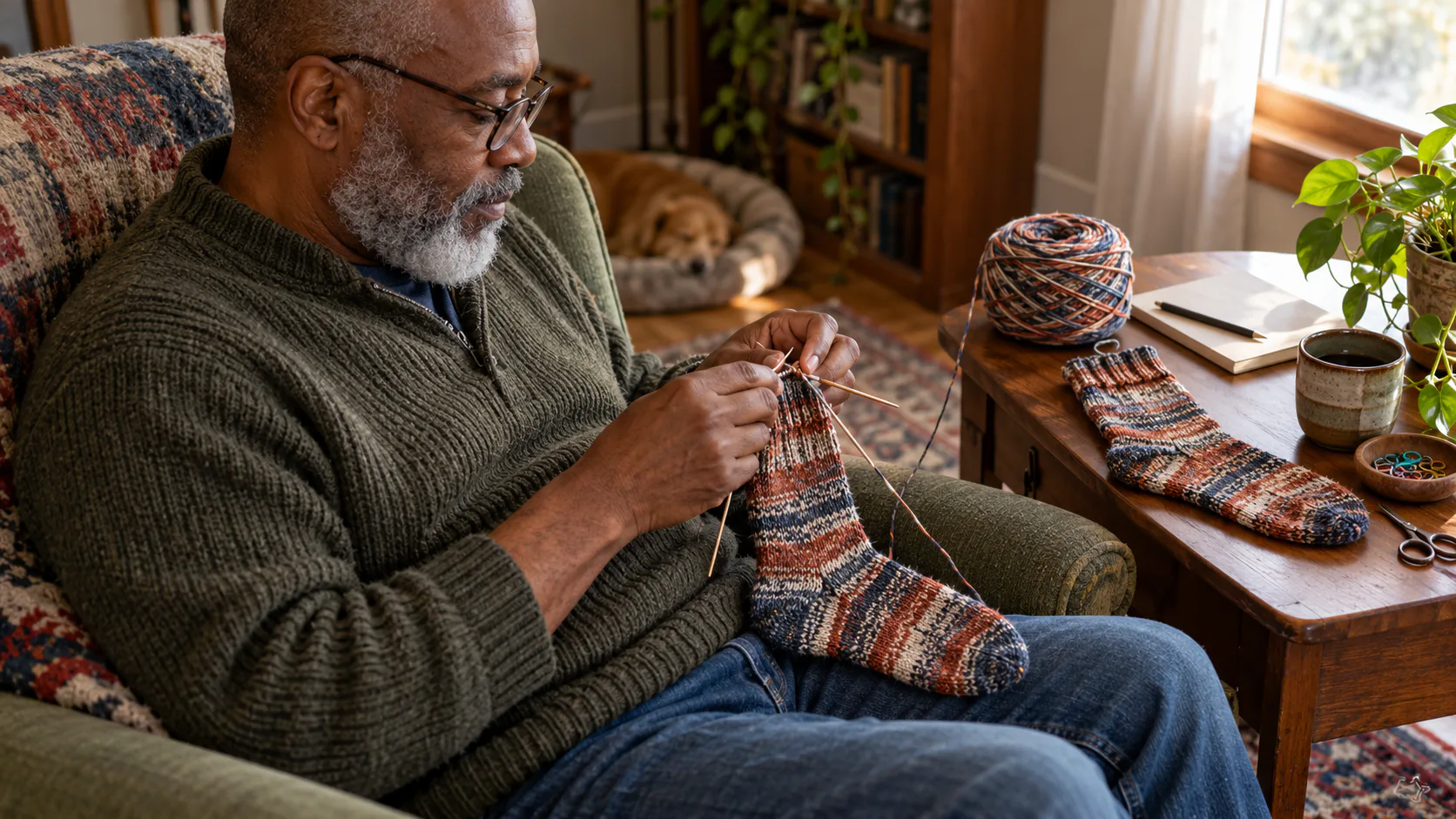
About 100 g is a useful starting amount for adult socks. Knit Picks gives approximately 100 g for adult sizes and approximately 50 g for child sizes in its sock-knitting guide. The final check is length: find the requirement for your size in the pattern and compare it with the yards or metres published for the exact yarn.
A 100 g package does not contain one standard length. The examples below range from 332 yd to 546 yd for the same total mass.
| Yarn quantity | Total mass | Published total length |
|---|---|---|
| One Malabrigo Sock skein | 100 g | 440 yd / 402 m |
| One Cascade Heritage hank | 100 g | approximately 437 yd / 400 m |
| One Malabrigo Ultimate Sock skein | 100 g | 420 yd / 385 m |
| Two Cascade 220 Fingering hanks | 100 g | approximately 546 yd / 500 m |
| Two Knit Picks Palette balls | 100 g | 462 yd |
| Two Patons Kroy Socks balls | 100 g | 332 yd / 304 m |
| Two DROPS Fabel balls | 100 g | approximately 410 m |
The table compares published quantity only. Gauge, fibre, construction, and the fabric you want still need their own checks before substituting one line for another.
Start with the pattern size
Find the length listed for the size you plan to make. Sock height, foot length, stitch pattern, and size can all change the quantity written into a pattern, so use its number rather than turning 100 g into a guarantee.
Write down three things:
- the required yards or metres for your size;
- the published length in one ball of the yarn you want;
- the number of whole balls produced by the calculation.
Keep one unit throughout. If the pattern is in yards, use the maker's yard figure. If it is in metres, use metres. When a maker publishes only one of those units, convert the requirement before dividing and keep the conversion visible in your notes.
Divide required length by length per ball
The purchase calculation is:
balls needed = pattern length ÷ published length per ball
Round upward only after the division. A fractional result represents part of a ball, and yarn is purchased as whole packages.
For a clearly hypothetical example, suppose your chosen sock size requires 440 yd and you want to use Patons Kroy Socks. Yarnspirations publishes that line at 166 yd per 50 g ball.
440 yd ÷ 166 yd per ball = 2.65 balls
round upward = 3 balls
Three balls contain 498 published yards:
3 × 166 yd = 498 yd
Two balls contain 332 yd, which is below the 440 yd requirement in this example. The arithmetic answers the package-count question. It does not establish that Patons Kroy will reproduce the fabric of the pattern yarn.
You can run the same calculation with the Skeinote calculator. Select the pattern yarn and replacement yarn when both are in the catalogue, or use the formula directly when the pattern already gives total length.
Why two 100 g quantities can be far apart
Mass tells you how heavy the yarn package is. Length tells you how far the strand runs. The relationship varies by line.
Malabrigo publishes Sock at 440 yd per 100 g, while Ultimate Sock is 420 yd per 100 g. Cascade publishes Heritage at approximately 437 yd per 100 g. Those three single-package examples sit fairly close together, but that does not create a general 100 g rule.
Smaller packages make the difference easy to see. Cascade 220 Fingering is approximately 273 yd per 50 g, so two hanks total approximately 546 yd. Patons Kroy Socks is 166 yd per 50 g, so two balls total 332 yd.
Cascade 220 Fingering: 2 × 273 yd = 546 yd
Patons Kroy Socks: 2 × 166 yd = 332 yd
difference: 546 yd − 332 yd = 214 yd
Both quantities weigh 100 g. Their published lengths differ by 214 yd. That is why the ball count comes from length rather than mass alone.
When the yarn comes in 50 g balls
Two 50 g balls reach the 100 g starting amount, but the useful total still comes from the line's length figure.
Knit Picks Palette contains 231 yd per 50 g ball, producing 462 yd across two balls. DROPS Fabel contains approximately 205 m per 50 g ball, producing approximately 410 m across two balls. Cascade 220 Fingering contains approximately 250 m per 50 g hank, producing approximately 500 m across two hanks.
These are quantity examples from fingering-weight lines. Their presence in the same table does not mean they share the same fibre, construction, care, or sock-wearing properties. Use the exact pattern's material and gauge instructions when choosing a yarn for the finished pair.
If you own only one 50 g ball, Knit Picks' general guide uses that mass as an estimate for child sizes. An adult project needs its own length check. Enter the one-ball length into the same formula and compare it with the adult size in your pattern.
Check the yarn after the quantity works
A sufficient published length is the first pass. Before buying the full quantity, compare the pattern yarn and proposed yarn for:
- the complete line name;
- the maker's weight wording;
- published stitch gauge and the pattern gauge;
- fibre content and care instructions;
- the fabric produced by a swatch in the pattern stitch.
Two labels can show similar stitch counts while the yarns differ in fibre or construction. Treat the package calculation as a shopping quantity, then make the separate fabric decision described in same yarn weight: will the fabric match?.
For the cleanest answer, start with the pattern's length for your size, divide by the exact ball length, and round upward. The 100 g guideline helps you recognize the usual scale of the project. The length calculation tells you what to buy.