 Skeinote
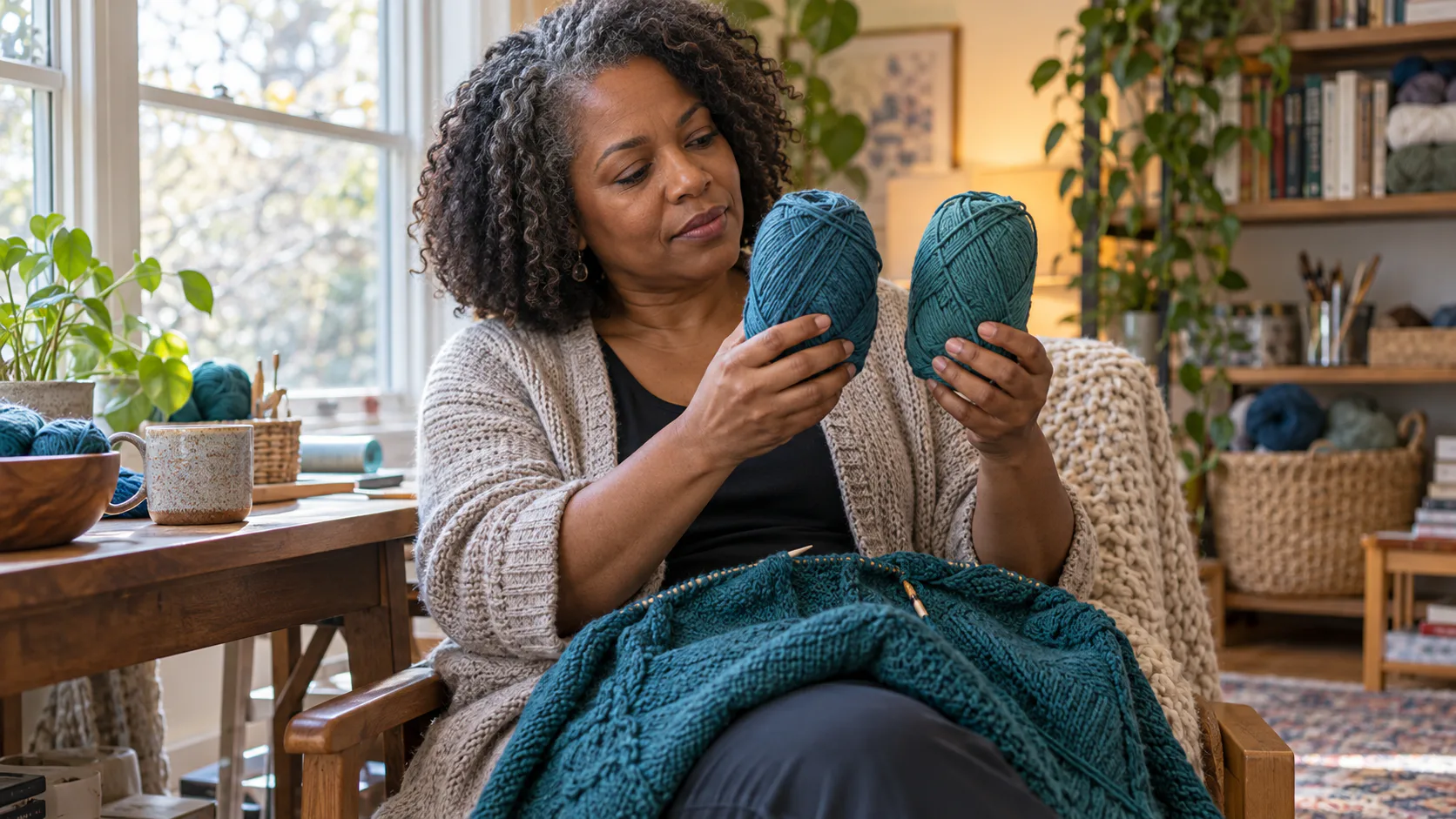
If the original dye lot is unavailable, compare the closest replacement with your project in natural and artificial light. When the difference is small enough to use, Lion Brand recommends alternating rows with the old and new lots to soften the color change. Its worked advice uses two rows from one lot, then two rows from the other.
Do not attach the new lot at one point and continue without checking it. A subtle difference between skeins can become a clear horizontal band across a sweater or blanket once several rows have been worked.
First, confirm what changed
A dye lot is the batch in which the yarn was dyed. Packages from one batch carry the same lot number. Another batch of the same yarn and named color may have a slightly different shade.
Find the original label and compare four details with the replacement:
- maker and exact yarn line
- color name or number
- dye lot number
- package length and mass
Matching the first two fields tells you that you found the same line and color. A different lot number tells you it came from a separate dye batch. If the label is gone, check project notes, receipts or photographs before relying on memory.
Some yarn is labelled “no dye lot.” The Craft Yarn Council explains this as fiber dyed before spinning. Lion Brand adds a useful caution: a no-dye-lot line can still be produced again later, so packages made at different times are not guaranteed to look identical forever. Put the skeins side by side and check the color anyway.
Try to find the original lot before blending
The cleanest rescue is more yarn from the original lot. Search using the exact line, color and lot number. Berroco directs customers looking for a particular lot to its dealers, which is a practical route for other brands too: contact yarn shops that stock the line and ask them to check the physical labels.
Bring a small piece of the original yarn or the project itself when shopping in person. Lion Brand recommends comparing the candidate in both natural and artificial light. Two shades that look alike under shop lighting can separate near a window.
If you find more than one replacement lot, compare each one with the original rather than assuming the newest or closest lot number will be the best visual match.
Make a transition swatch
Before changing the project, work a small sample that contains both lots. Begin with the original yarn, switch to the replacement, and look at the dry fabric in the lighting where the finished item will usually be seen.
This quick test answers the important question: is the difference small enough to blend, or does it read as a deliberate color change? A photograph can help because a tonal break that is easy to overlook while knitting may stand out in the image.
If the two colors are clearly different, alternating rows will distribute the contrast but will not turn them into the same shade. For a border, stripe or separate panel, a deliberate contrast may look better than trying to hide a strong mismatch.
Alternate the two dye lots
For a close match, Lion Brand's guidance is straightforward:
- Keep some of the original lot available. If you used every loose strand, the maker notes that you may need to unravel a small amount to recover working yarn.
- Work two rows with the original lot.
- Change to the replacement lot and work two rows.
- Continue alternating the two lots through the transition.
This spreads both shades across the same area of fabric. The eye sees a gradual mixture instead of one row where the entire project suddenly changes color.
Keep the alternation consistent. If the project is worked in the round or has a stitch pattern that makes row changes awkward, test the switching point in the swatch before changing the project. The useful principle is to distribute the two shades through a transition area rather than exhausting the old lot and beginning the new one at a single hard line.
Choose where the transition begins
Plan the change where you have enough original yarn left to alternate. Waiting until the original lot is completely gone removes that option.
If possible, avoid placing the first mixed rows at a visually prominent landmark such as the center of a plain front panel. A textured section, border or natural construction break may make a small variation less conspicuous. The swatch should guide that choice because stitch texture and lighting change how the color reads.
For a garment made in separate pieces, compare the pieces together before assigning the new lot. A sleeve made entirely from a slightly different shade may be more noticeable than a controlled transition within both sleeves.
Calculate the replacement quantity from the exact line
Once you have a workable color match, calculate how many replacement packages you need from the remaining pattern length and the maker's package figure.
remaining project length ÷ length per package = packages required
Round a partial package up to the next whole package. Keep yards with yards or metres with metres. The Skeinote calculator uses the stored package figures for the selected yarn line.
This calculation answers quantity only. It does not predict whether the two lots will blend, which is why the light comparison and transition swatch come first.
If the exact yarn line is unavailable as well as the lot, move to the broader process in what to do when the pattern yarn is discontinued. That decision also requires checking gauge, fiber, care and package length.
Keep the labels until the project is finished
Save at least one label from every lot used in the project. A phone photograph of the front and back gives you a second record of the line, color and lot number. If you need more yarn again, you can search with exact details instead of trying to identify a shade from memory.
The practical rescue sequence is short: look for the original lot, compare the closest replacement in two kinds of light, test both lots together, then alternate the old and new yarn through the transition. That gives a close match its best chance of looking intentional across the finished fabric.